This book can be read page by page, heard with synthetic Voice 7 narration, downloaded and printed. Enable JavaScript for the interactive reader, or open the story pages below.
An illustrated biography about Albertina Sisulu. Longer text and historical injustice call for a school-age reader and adult context.
Read all 12 story pagesOne harsh winter, many people in the land were sick. Ma Monikazi’s cheeks burned. Sweat dripped from her body. She wanted to hold the icy grass to her face to cool down. Under her blanket she held her belly and sang to the baby inside her: “Be strong, little one. Winter’s not long. Be brave, little one. Together we’re strong!”
Her stomach growled when the baby’s powerful kicks woke her at night. She ate the leftover meat in the cooking pot, hungry for life.
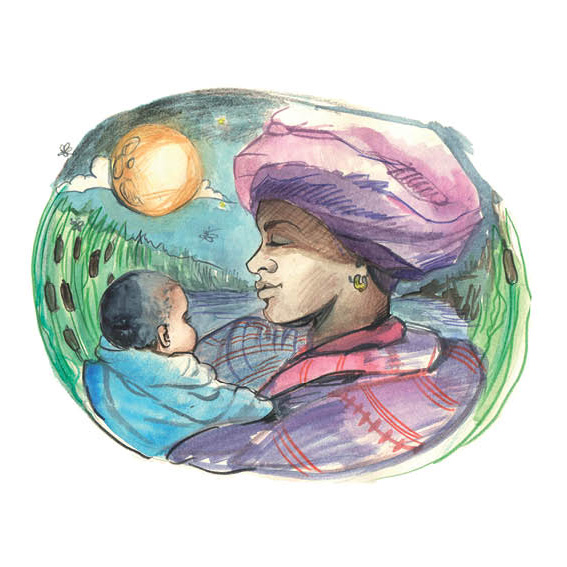
One bright night the moon was bigger, fatter and pinker than ever. Her breath came fast. The baby was ready. The aunties in the birthing room rubbed her back and warmed the water. When Monikazi held her beautiful daughter in her arms, she knew she was a special girl, a fighter.
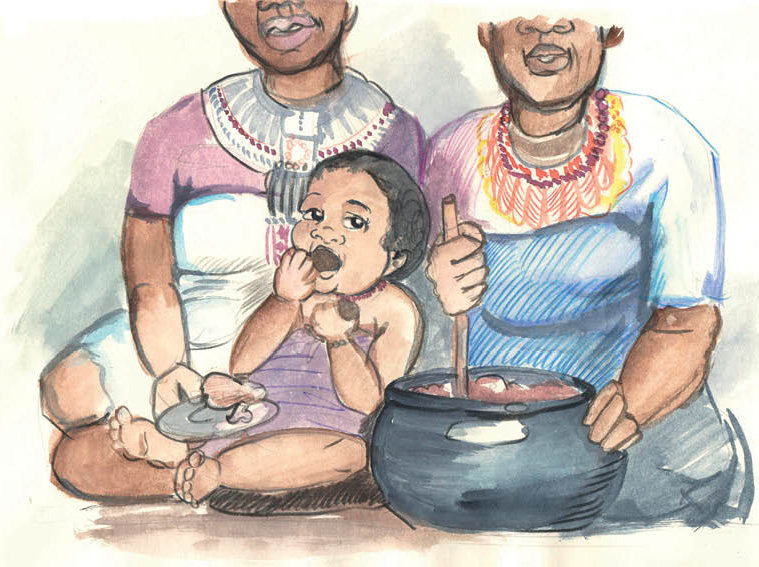
What a blessing! Her name is Nontsikelelo. She will be the mother of all blessings.Nontsikelelo was beautiful and strong with crinkling black button eyes. She loved her older brother, Mcengi. He made her laugh and so the laughter spread. She loved to eat meat before she had teeth. Her favourite aunt always kept a little portion on the side of her plate for Ntsiki. Mcengi chased the chickens that scratched in the garden where Ma Monikazi grew spinach and squash to feed her family. Ntsiki ran after him as her legs grew strong.
Ma Monikazi had another baby boy, Velaphi, and another, Qudalele. Finally another sister, Nomyaleko. Little Ntsiki folded napkins and washed the baby clothes. She swept the house and fed the fire. She picked up her baby brother when he cried and tickled him till he laughed.
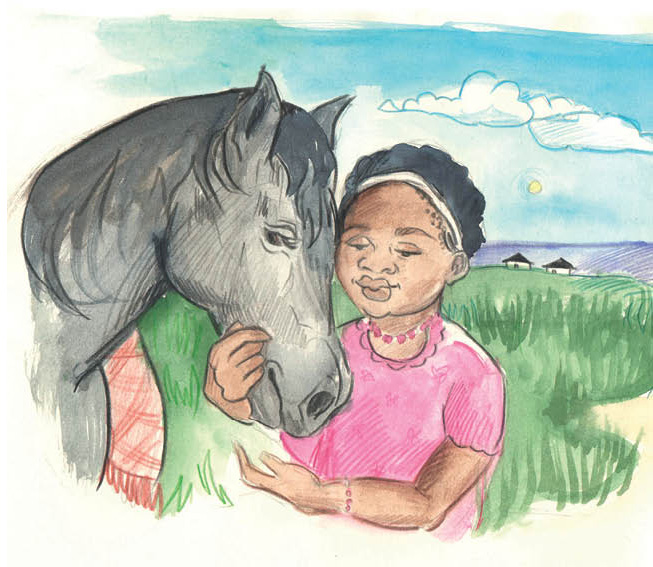
She taught them to sing: “Be strong, little one. Winter is gone. Be brave, little one. Together we’re strong!”Qingqiwe, her grandfather, raised horses. His favourite was Shishi, a glossy black mare. As soon as Ntsiki was old enough, he hoisted her on to the saddle in front of him. His strong arms reached around her. He laced the reins through her fingers.
He taught her to talk softly to Shishi, to groom her with a hard bristled brush. When she stroked its glossy coat, Albertina whispered, “You are the most beautiful creature. Thank you for letting me ride on your back.”
Her father, Bonilizwe, came home from the mines at Christmas. Ntsiki pulled herself up onto Shishi’s broad back. She rode out to meet him at the bus stop. Ntsiki sat tall and straight. Her knees held firm. She handled the reins with gentle fingers.
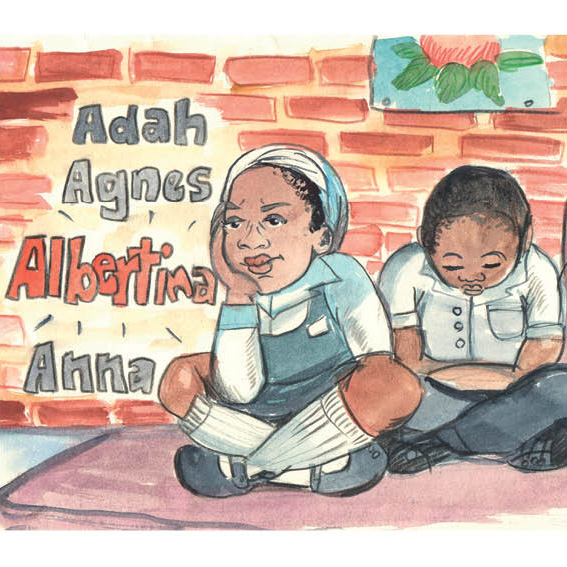
How proud Bonilizwe was of his daughter. The biggest smile Ntsiki had ever seen covered her father’s face.On her sixth birthday she went to school. “You must choose an English name,” said the Presbyterian teacher, but Ntsiki liked her own name. “Why do I need a new name?” she asked. The teacher scowled and read the names aloud: “Adah, Agnes, Albertina, Anna.” What did they mean? Ntsiki liked the long name best. Al-ber-ti-na! The name had rhythm. Al-ber-ti-na! The name had bounce. Albertina was a name you didn’t mess with.
When her cousin married a handsome man from a nearby town, Albertina was chosen as an umkhapi. The maid of honour! Weeks before the wedding, she stitched her isikhakha, the short traditional skirt, and threaded bright beads onto her amatikiti. Her mother gave her the white flag and said, “You have a big job, my blessing.”
At the bend in the road Albertina waved the flag, then turned Shishi back, leading everybody from miles around to the ceremony. People would gossip if she made a mistake, but the guests lined the road. They ululated and sang. They threw down flowers for the horse and the girl.Her mother was often sick and needed Albertina to look after the home. In her last year of primary school, Albertina was the oldest pupil in the school. She was chosen to be the head girl and wore her badge with pride.
Her best friend, Betty, told her about a competition, saying, “You must apply, my clever friend.” “What is the prize?” asked Albertina, growing curious.
“A scholarship to high school!” said Betty. “You must apply. You’ll win it, for sure.
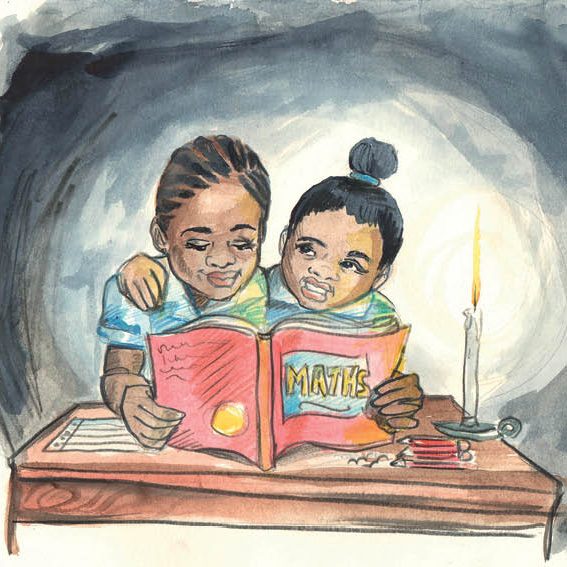
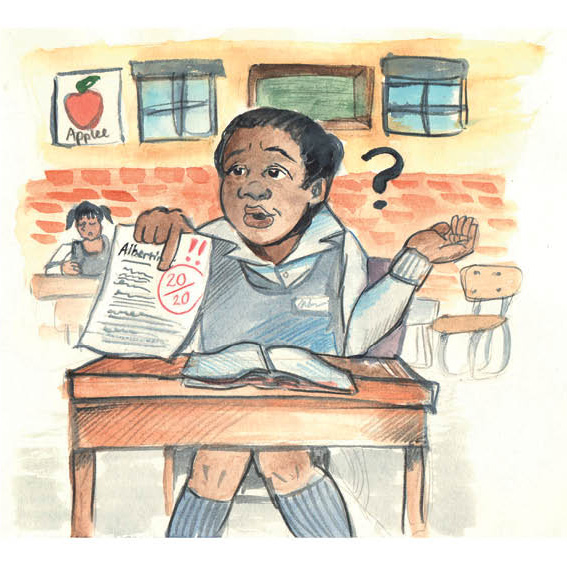
”Albertina studied until the candle burned down. She practised sums. She practised spelling. She sharpened her pencils and gave her shoes an extra shine. Next morning she passed Shishi in her paddock. The horse whinnied and stamped the ground.The test began. Albertina’s fingers shook. The sums were tricky. Her mouth went dry. Her hand cramped on her pencil but she continued. “Well done, Albertina!” said her teacher at the end. The important official arrived and called the top two students to the stage. “Well done to Albertina for full marks,” he said, “but you are too old. The scholarship goes to…”
Albertina tried not to cry. “That’s unfair,” shouted Betty, hopping with fury. “That wasn’t in the rules!” How would Albertina go to high school now? She dragged her feet all the way home.
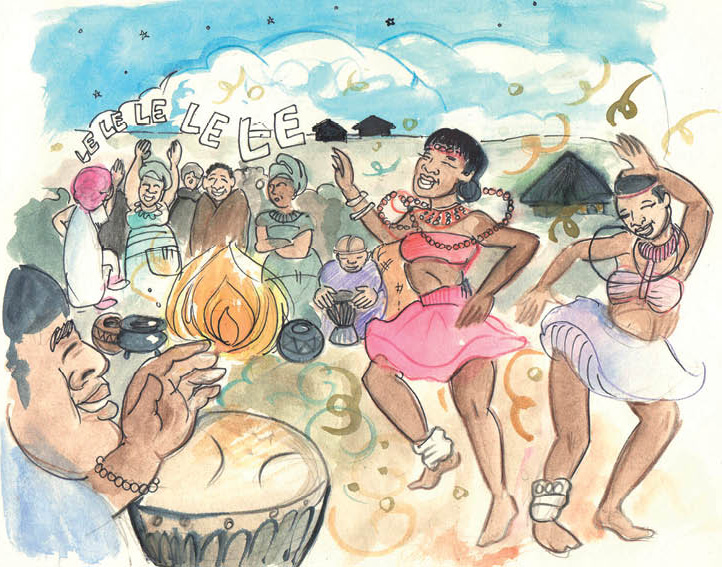
The teacher wrote to the newspaper about the unfair decision. Brother Joe at the Catholic Mission station read the story over his breakfast. He cracked his boiled egg with an extra flourish. He pushed the newspaper across the table to Father Bernard. He didn’t like the story one bit either.Soon enough there was a scholarship for Albertina. Mariazell near Matatiele was a long way from Xolobe, but the whole village erupted. Their home girl was off to high school. She would make them proud. They threw a party like no other. The women brewed the sorghum beer and lit the fires. They slaughtered chickens and stirred up pots of meat. Albertina smiled till her face ached.
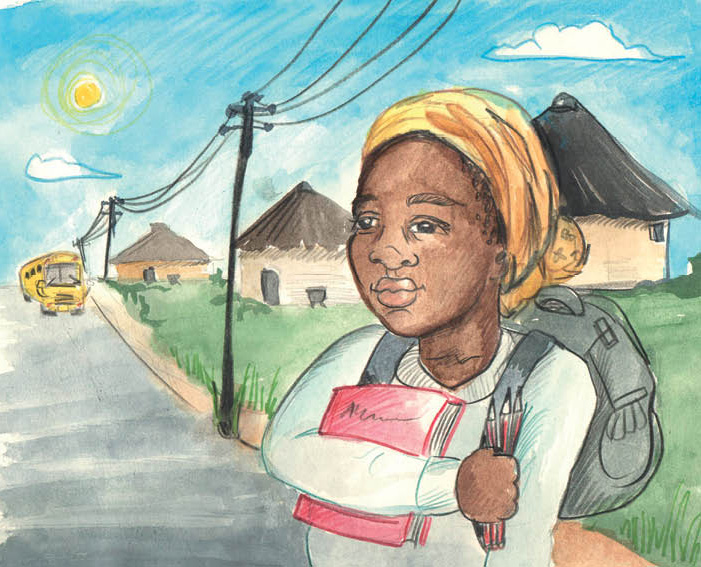
She packed her brown suitcase and polished her shoes again. Before setting off on the bus to Matatiele, she said goodbye to Shishi. Albertina brushed her coat and stroked her wiry mane. She whispered all her questions into the horse’s silky ear: What if I get lost? Will I make new friends? Will I still be clever so far from home? Shishi whinnied and stamped the ground.School days started well before sunrise. The girls washed quickly in the cold water and swept the dormitories before Mass. The milky porridge was never quite enough; the stew not as tasty as Aunty’s back home. But Albertina studied hard. She played netball on sunny afternoons.
In her school holidays Albertina worked at the mission station. She rubbed and scrubbed against the zinc washboard. She boiled sheets in copper tubs, then wound them through the wringer. She hoed and tilled the school garden but missed her family. Who was telling her brothers and sisters funny stories? Who wiped their eyes when they cried? Who tickled them until they laughed?
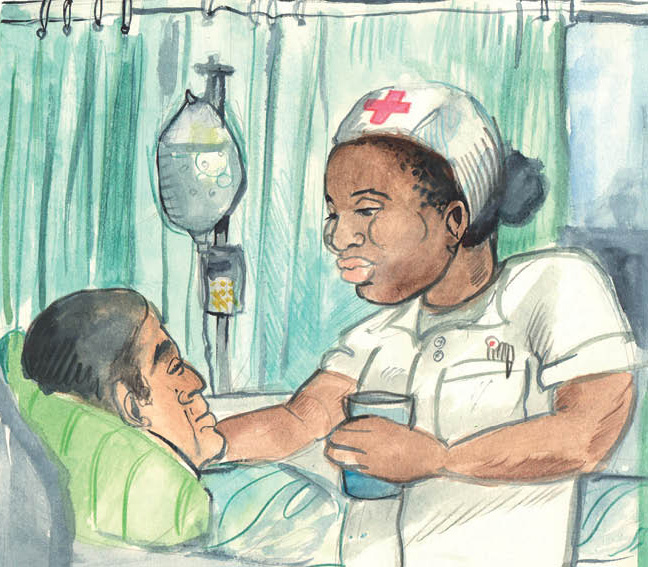
Albertina loved the nuns who taught her. Could she become a holy sister? “But nuns earn no salary,” said Father Bernard. “Perhaps you should become a nurse? You’ll be paid while you study.”Albertina took a train to Johannesburg. She bought a smart white uniform, new navy shoes and a shiny red fountain pen. Sick people came all day to the hospital. She cleaned their wounds with careful fingers. She held the old people gently. When the babies cried, she sang: “Be strong, little one. Winter’s not long. Be brave, little one. Together we’re strong!
Some nights Albertina worked till dawn. She looked out the window and thought of her family. Were the children hungry? Did they go to school? Who was riding Shishi? She remembered the dark green spinach. She missed the scent of the earth. There was no vegetable garden here. There was nowhere for a horse.
Albertina never went to parties. She saved every shilling. On her days off she learned to play tennis. Whoosh! Plop! She whacked the ball across the net. Always, she wished for a little more money to send home.Walter Sisulu was a brave and clever man who dreamed of freedom for South Africa. His big smile captured Albertina’s eye. They walked together down the city streets. Her delicate hand rested on his arm. Walter wanted Albertina to be the mother of his children.
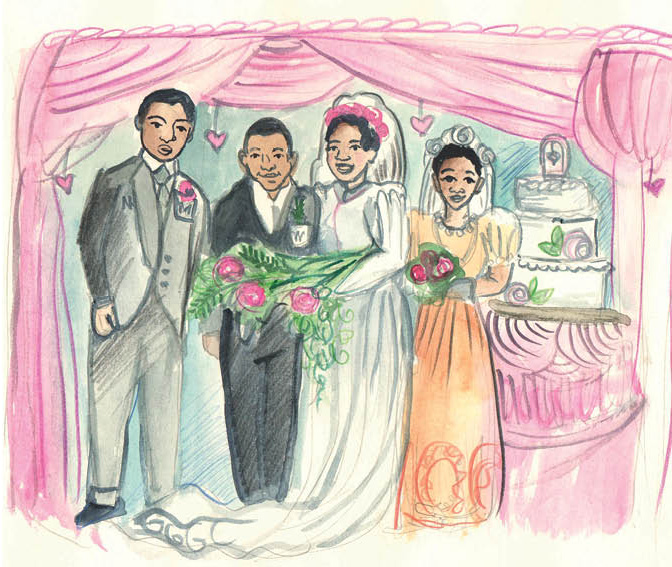
Bright ribbons decorated the Bantu Men’s Social Centre on their wedding day. Albertina’s long-sleeved dress had a swirling train of lace. Many friends blessed their special day. Albertina planted flowers in her little garden. Within a year, Max was born. Albertina had become a mother. One day people would call her the mother of the nation.
Max had his mother’s black button eyes and his father’s round chin. He was the hope for their future. Albertina wanted to fight for a new South Africa, so that Max could be free. When he cried, she sang: “Be strong, little one. Winter’s not long. Be brave, little one. Together we’re strong!”Police came in the middle of the night, banging on the door. Albertina scolded the men who messed up her house. “How rude you are!” she said, “trampling mud inside my home.”
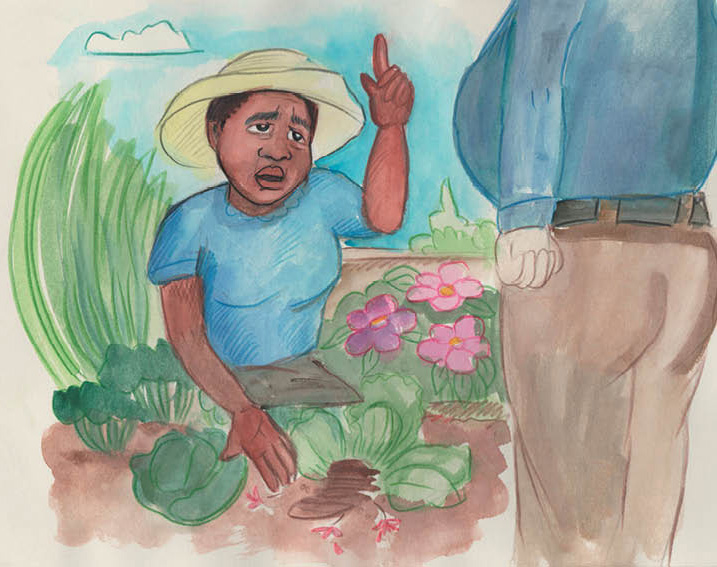
In the morning Albertina’s favourite flowers lay crushed beneath their footprints. She remembered chasing the chickens from her vegetable garden back in Xolobe and set about replanting her garden. The earth, she knew, would recover.
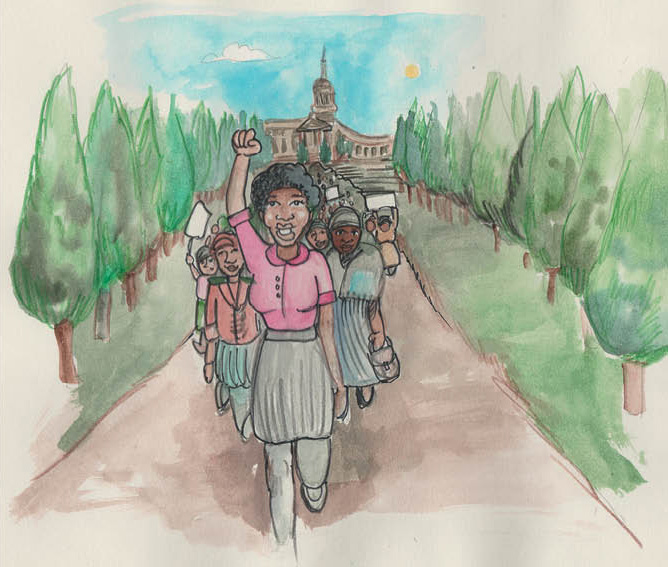
She would support her husband who kept many secrets and hid from the police.She joined the women and worked to organise a march to Pretoria. The women refused to carry a pass. They sang, “Wathint’ abafazi; wathint’ imbokodo! You strike a woman; you strike a rock!”
Many hard years followed after Walter’s arrest. He was jailed on Robben Island for 26 years. Albertina, also, was sent to jail many times. Often she was scared. Often she was lonely.
But even on the darkest nights, she could see a sliver of moon through the window in her cell. She sang the song that Ma Monikazi sang before she was born: “Be strong, little one. Winter’s not long. Be brave, little one. Together we’re strong!”
Web and printable layout adapted by Little Leaf. Age and reading-level suggestions are editorial. Original stories and artwork belong to their credited creators. Website narration uses the selected synthetic Voice 7.